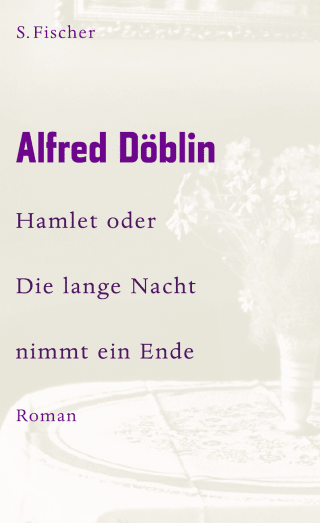
In his masterful Hamlet novel, Alfred Döblin tells the story of the English soldier Edward Allison, who returns to his parents’ home from the war, severely wounded. His incessant neurotic question on the purpose of the war brings to light the family’s great lie, leading to a battle for life and death until the ‘long night of the lie’ is finally over... Unlike in his earlier historical works, this last of Döblin’s great novels does not present a comprehensive panorama of the epoch. Instead, he uses a family story as a mirror for political history: war and violence, Döblin was convinced, will exist for as long as we fail to acknowledge our own inner depths. And telling stories is one way to do so.
’In Hamlet, Döblin once again brings together his most important themes such as identity, guilt and responsibility, the battle of the sexes, etc., masterfully playing with the achievements of literary modernism.’
Gabriele Sander, Kindlers Literatur Lexikon