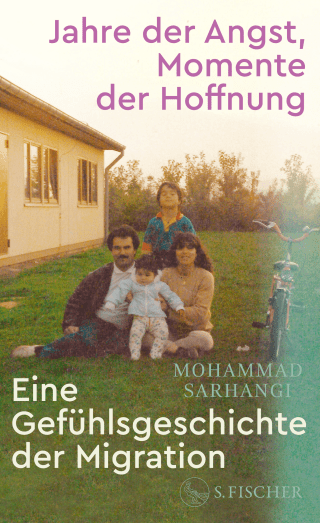
How exile, marginalisation and discrimination shape feelings
"From the balcony, I looked out onto a playground where children my age were running around and having fun. After a brief hesitation, I asked them if I could play with them. The answer was: 'No, we don't play with foreigners.' I don't remember how I felt at the time. In retrospect, it was clear: in future, I would look in the mirror and recognise a foreigner." It is events like these that produce feelings of marginalisation: Fear, shame, anger, despair, but also longing and hope. The historian Mohammad Sarhangi analyses the extent to which the diverse experiences of migration shape and form the feelings of migrants - even across generations. He impressively interweaves his own experiences with oral history interviews and autobiographical as well as literary publications to create an equally insightful and touching book.
"an emotionally differentiated map that spans hope, fear, anger, experienced contempt and rejection" - Frankfurter Allgemeine Sonntagszeitung
"Impressive and highly topical." - Philosophie Magazin, Jana Glaese